Remote work has transformed the way people approach their careers, offering flexibility and freedom that traditional office jobs often lack. With advancements in technology and the global shift toward digital communication, working from home or anywhere in the world has become more accessible than ever. However, while remote work offers many advantages, it also comes with its own set of challenges. In this article, we’ll explore the pros and cons of remote work to help you determine whether it’s the right fit for you.
What Is Remote Work?
Remote work, also known as telecommuting or working from home, refers to a work arrangement where employees perform their job duties outside of a traditional office environment. This can include working from home, coworking spaces, or even while traveling. As remote job opportunities continue to grow, professionals often use a free resume builder to stand out when applying for roles in competitive global markets.
Pros of Remote Work
1. Flexibility and Work-Life Balance
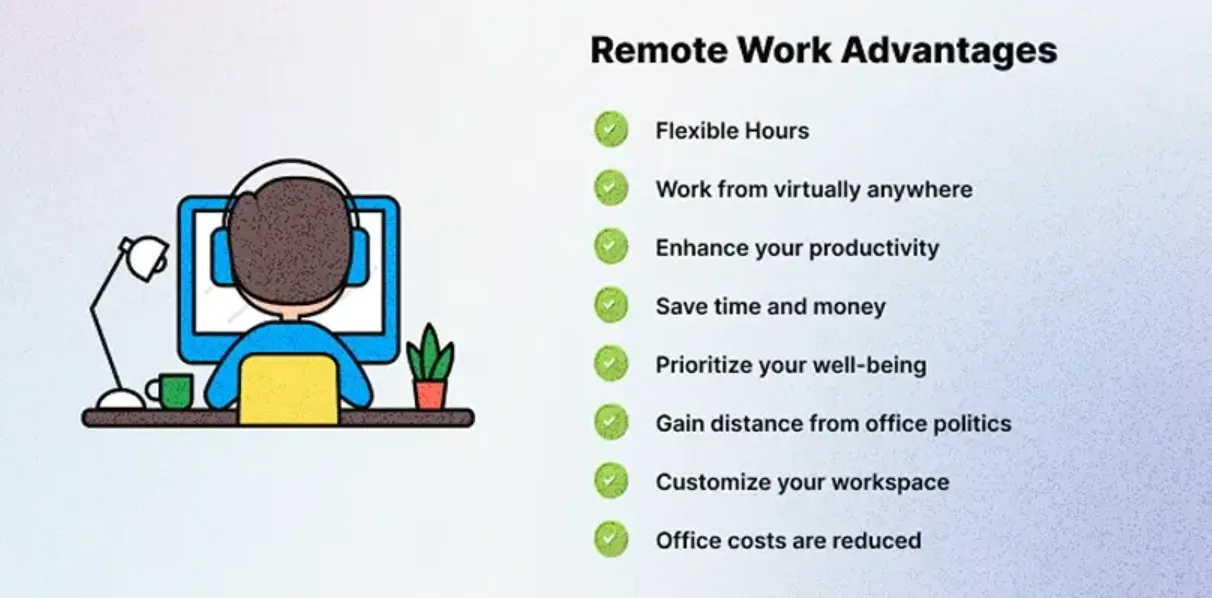
One of the biggest advantages of remote work is flexibility. Employees can often set their own schedules, allowing them to balance personal and professional responsibilities more effectively.
For example, parents can spend more time with their children, and individuals can manage errands or appointments without disrupting their workday. This flexibility often leads to improved work-life balance and overall job satisfaction.
2. No Commuting Stress
Commuting can be time-consuming, expensive, and stressful. Remote work eliminates the daily commute, saving both time and money.
Without the need to travel to an office, employees can:
- Save on transportation costs
- Reduce exposure to traffic and pollution
- Start their day with less stress
This extra time can be used for productivity, exercise, or relaxation.
3. Increased Productivity
Many remote workers report higher productivity levels compared to working in an office environment. Without constant interruptions like meetings, office chatter, or distractions, employees can focus better on their tasks.
Additionally, people can create a personalized workspace that suits their preferences, which can enhance efficiency and concentration.
4. Cost Savings
Remote work can significantly reduce expenses for both employees and employers.
For employees:
- Lower transportation costs
- Reduced spending on work attire
- Savings on meals and coffee
For employers:
- Less need for office space
- Lower utility and maintenance costs
5. Access to Global Opportunities
Remote work opens doors to job opportunities worldwide. Employees are no longer limited by geographic location and can work for companies across different countries.
This also benefits employers, who can hire talent from a global pool, leading to more diverse and skilled teams.
6. Better Health and Well-Being
Working remotely can positively impact mental and physical health. Employees can:
- Take breaks when needed
- Exercise during the day
- Avoid workplace stress and office politics
A comfortable home environment often leads to reduced stress and improved well-being.
Cons of Remote Work
1. Isolation and Loneliness
One of the most common disadvantages of remote work is social isolation. Without face-to-face interaction, employees may feel disconnected from their colleagues.
This lack of social engagement can lead to loneliness and negatively impact mental health over time.
2. Difficulty in Communication
Remote work relies heavily on digital communication tools like email, chat, and video calls. However, these methods can sometimes lead to misunderstandings.
Without in-person interaction, it can be harder to:
- Read body language
- Build strong relationships
- Collaborate effectively
3. Work-Life Boundary Issues
While remote work offers flexibility, it can also blur the line between work and personal life. Many remote workers struggle to “switch off” after work hours.
This can lead to:
- Overworking
- Burnout
- Reduced personal time
Creating a structured routine is essential to avoid these issues.
4. Distractions at Home
Working from home comes with its own set of distractions, such as:
- Household chores
- Family members
- Television or social media
Without proper discipline, these distractions can reduce productivity and focus.
5. Limited Career Growth
Remote employees may face fewer opportunities for career advancement compared to in-office workers.
Being physically present in an office often allows employees to:
- Network more effectively
- Gain visibility with management
- Participate in spontaneous discussions
Remote workers may need to put in extra effort to stay noticed and connected.
6. Dependence on Technology
Remote work depends entirely on reliable technology and internet connectivity. Technical issues can disrupt productivity and cause delays.
Common challenges include:
- Internet outages
- Software glitches
- Cybersecurity risks
Having backup systems and strong digital skills is crucial for remote work success.
Tips for Successful Remote Work
To make the most of remote work while minimizing its downsides, consider the following tips:
- Create a dedicated workspace
- Set a schedule
- Stay connected with your team
- Take regular breaks
- Invest in reliable technology
Is Remote Work Right for You?
Remote work is not a one-size-fits-all solution. While it offers freedom and flexibility, it also requires discipline, self-motivation, and strong communication skills.
If you value independence and flexibility, remote work may be ideal. However, if you thrive in social environments and structured settings, a traditional office might suit you better.
Conclusion
The pros and cons of remote work highlight a balanced picture of this modern work style. While it provides flexibility, cost savings, and increased productivity, it also presents challenges like isolation, communication barriers, and blurred work-life boundaries.
Ultimately, the success of remote work depends on how well individuals and organizations adapt to its demands. By understanding both the benefits and drawbacks, you can make informed decisions and create a work environment that supports your goals and well-being.
Also Read: First-Class Travel Experiences: The Ultimate Guide to Luxury in the Skies and Beyond

Hi, I am Admin of Punwaves.com, your ultimate destination for clever puns and laugh-out-loud jokes you Dive in for daily wordplay waves that keep your humor fresh and fun.